
Aurora (Local Universe, Tarmalyula)
More actions
Aurora is a temperate habitable planet orbiting a orange dwarf star in the Tarmalyula Galaxy. It is the capital of the Democratic Commonwealth of Aurora, as well as it's most important planet.
Geography
History
Aurora formed 6 billion years ago, along with the rest of the Aurora System. It originally formed with half of its current mass, but since has accreted the rest through interactions with dwarf planets, planetesimals, and asteroids.
As it formed, a rogue protoplanet was drawn too close to it. It fell into orbit around the molten hell that was Aurora at the time, and became its largest moon. This was Cloud, but it was vastly different. At the time, Cloud had seas, an atmosphere, a magnetic field. Some predictions even think that it may have had life, and then accidentally sprinkled it onto the surface of Aurora. Whichever is correct, this moon is now a barren craterscape with almost no signs of flowing water on its surface. So what happened?
It is now widely believed that the Troeimyl Civilization was founded and spread off this moon. When they fell, the moon was so heavily bombarded with weapons (most likely asteroids) that it blew the atmosphere away and destroyed all evidence of life on the surface. Luckily, the carbon-based life it had spawned continued on its Aegyn-like orbital parent, and still does today.
Around 34 700, a group of refugee humans fled from Aylothn and arrived here, settling the planet. It was only slightly different from Aegyn, so they had little trouble adapting. The oxygen content was slightly higher, and the atmosphere was slightly less pressurised, but they survived through a process of genetic engineering and selective breeding. As they pregressed on the planet, they eventually regressed into savages, living as hunter-gatherers of the land. They evolved slightly, and are now sufficiently diverse from other humans to have their own sub-species; Auroran Humans.
Eventually, they rediscovered technology and re-wrote their past, and finally figured out why there was a two-kilometre high pyramid on a deserted peninsula, many thousands of kilometres away from civilization.
Locations
A series of locations on Aurora's surface are seen below. Take note that some ruins and buildings can be seen.


Emola Desert
-
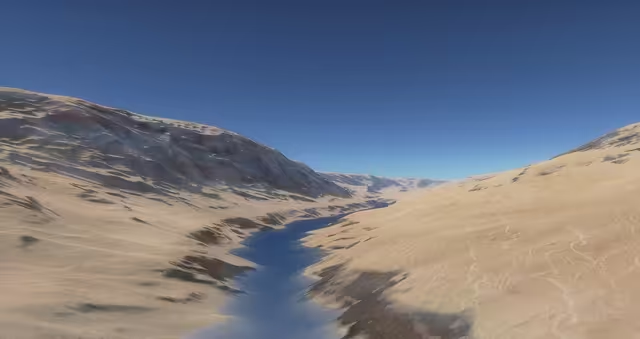 A river flowing through the Desert
 -
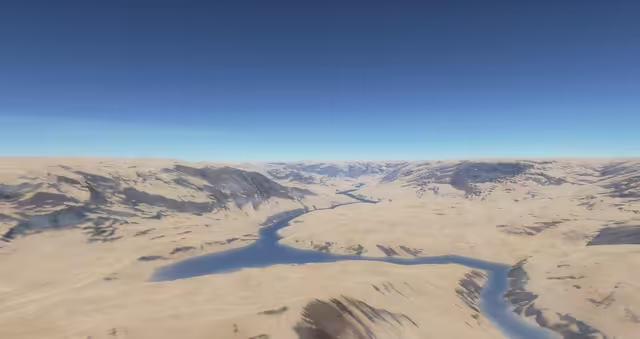 The same river, farther down stream
 -
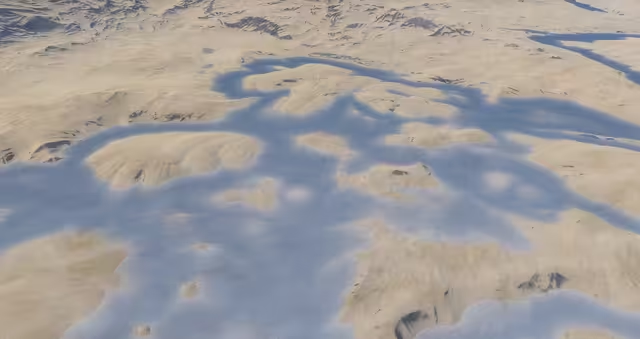 Were the river meets the Ocean is a large plain of deltas and sandbanks
The Emola Desert is a large desert located in the centre of the largest continent. It has a mutlitude of rivers flowing through it, sustaining life on their narrow banks.
Otockami Alpine Region
-
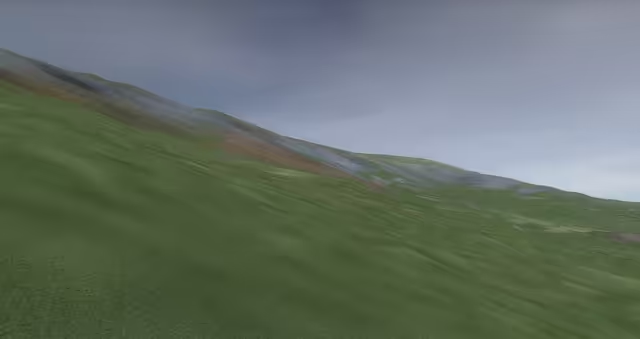 The overcast skies and steep hills of the Otockami Alpine Region
The Otoockami Alpine Region is a series of hills and mountains, covered in grass and trees. It is rather cold here, even by Auroran standards. These are the least populated regions, and are found near the ice cliffs of the northern and southern ice caps.
Pyramid Country
-
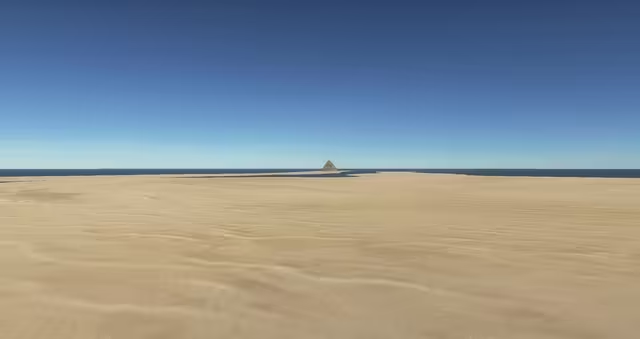 The Pyramid from a distance
 -
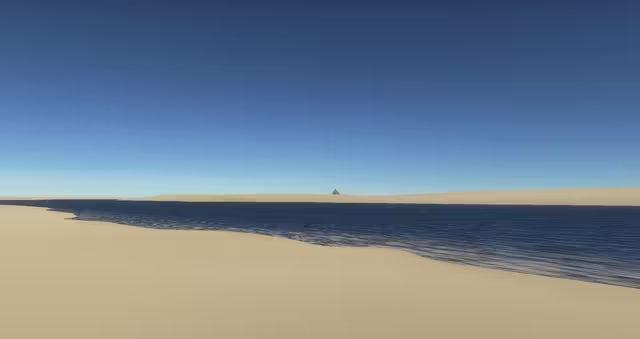 The Pyramid again
 -
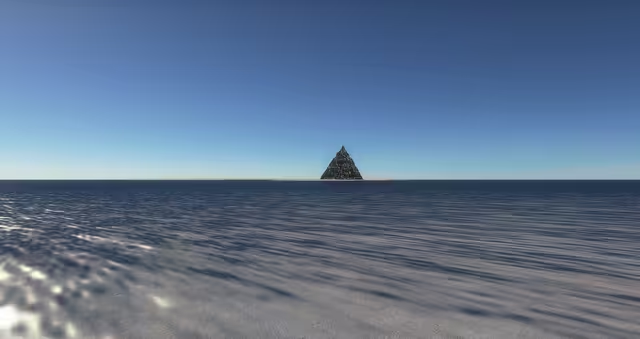 Closer up
Pyramid Country is the smallest of the regions of Aurora, but one of the most well known. It constitutes a ten-kilometre long peninsula into the sea, mainly sand and gravel, but towards the end there is a emmense sandstone pyramid, two kilometres in height. It is though that it was constructed by the Troeimyl Civilization, as a monument to their civilization.
Repo Grasslands
-
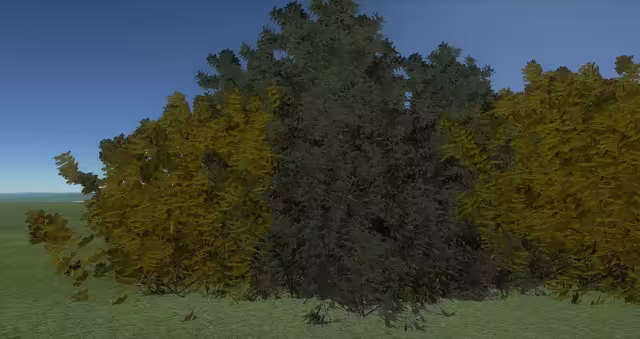 The trees of the Grasslands
 -
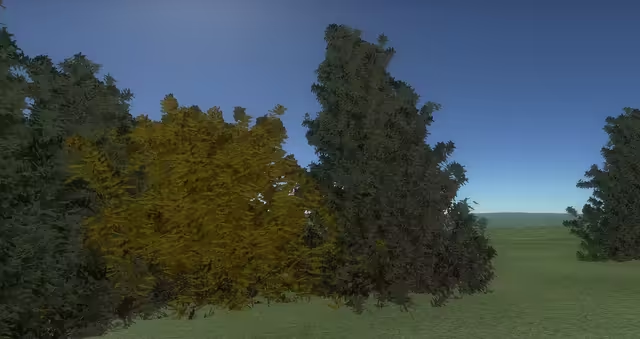 The Same trees
 -
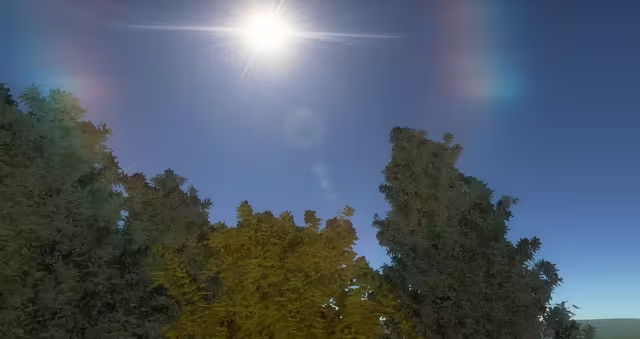 The trees again, with Auroran Star at the top
 -
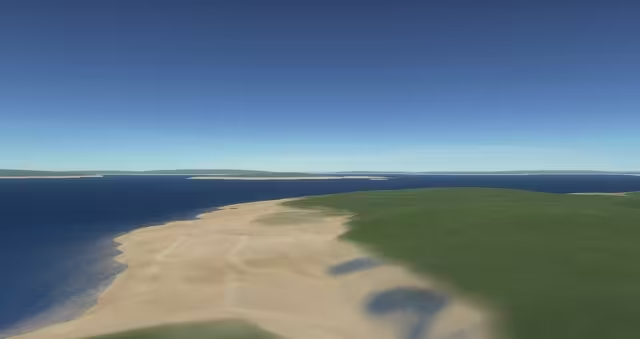 The western boundary
 -
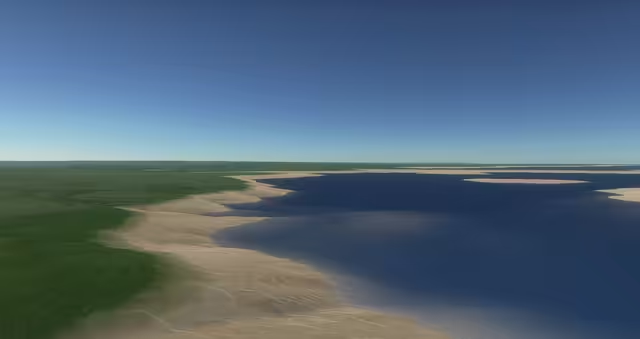 The Eastern Boundary
 -
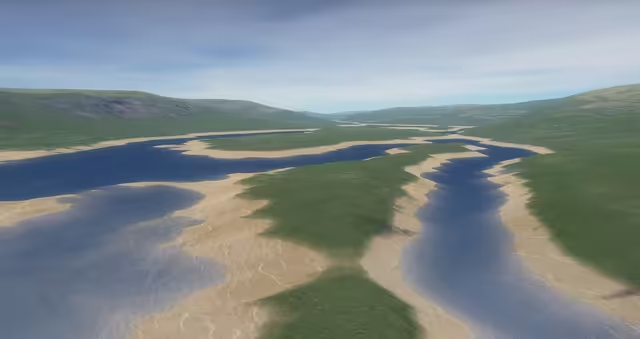 A river running through the grasslands
The Repo Grasslands are the largest area of Aurora - so large, that they take up 60% of one of the alrgest continents. It is here were the dense megacities are located, huge pyramid stacks of levels hundreds of kilometres in area, on top of each other.
Governance
The government of Aurora is a democracy, with each of the 128 regions electing two representatives, a male and a female, to join in a world court with 256 representatives. Of these, they then elect a world two world leaders, again a male and female, to represent Aurora in the Democratic Commonwealth of Aurora's government.
Population
The population of Aurora is mainly located in huge dense megascities, each with the land area of a decent sized continent, scattered across the planet. They are about ten kilometres in height, and there are 6 928 of them. A few are free-floating on the sea, but most are anchored strait into the crust of the planet.
The culture in each of these cities varies as if you have traveled to a different planet - in one, there would be top-of-the-notch street art decorating every intersection, in another, loud rock music blaring from every speaker. It is these cities and their combined average culture that gives Aurora such a diverse mix of ethics, culture, and religions.